
Why Is Raz Vape E-Liquid Thicker in Winter And How to Fix It
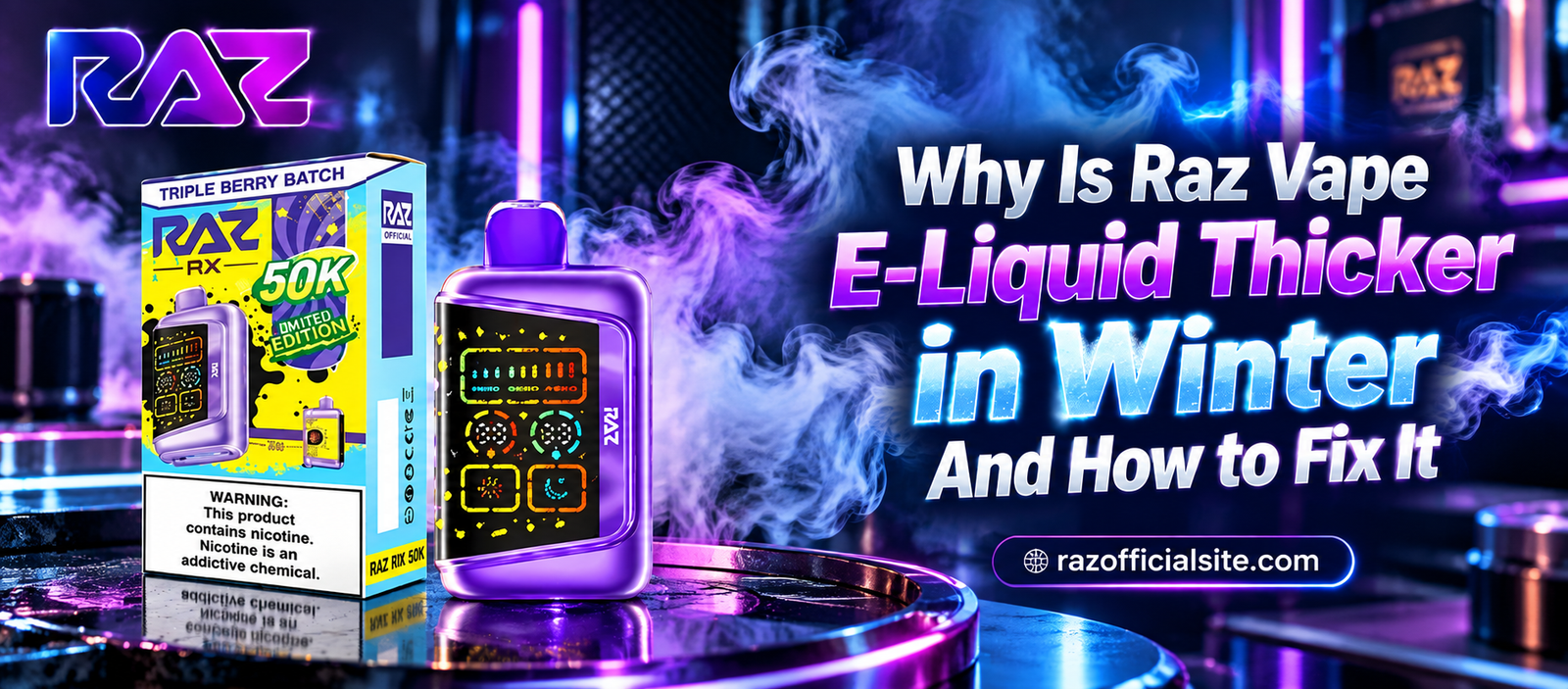
Table of Contents
- The Chemistry of Cold E-Liquid and Viscosity Shifts
- How Low Temperatures Impact Wicking and Coil Heating
- Recognizing the Early Signs of Thickened E-Liquid
- Safe Techniques to Warm Your Disposable Device
- Adjusting Your Inhale Style for Cold Weather Vaping
- Protecting Your Battery Performance in the Cold
- Smart Storage Habits to Prevent Winter Vape Issues
- Simple Daily Practices for Smooth Cold-Weather Hits
The Chemistry of Cold E-Liquid and Viscosity Shifts
When winter rolls around, you might notice your vape hits feel a little dry, weak, or muted compared to summer. This change comes down to simple physics and chemistry. Most e-liquids rely on a base blend of Vegetable Glycerin (VG) and Propylene Glycol (PG). VG is responsible for dense vapor production and a smooth throat hit, but it is naturally thick at room temperature. When temperatures drop below freezing or sit in unheated spaces, VG thickens rapidly, taking on a heavy, gel-like consistency that slows down its ability to flow.
In a Raz Disposable Vape, the internal liquid reservoir is packed alongside cotton wicking material designed to draw fluid steadily toward the heating element. During cold spells, thick liquid struggles to saturate the cotton core quickly enough. Instead of moving smoothly through the microscopic pores of the wick, cold e-liquid stays sluggish, leaving the center of the coil starved of moisture during continuous hits.
How Low Temperatures Impact Wicking and Coil Heating
A vape coil relies on a continuous balance between heat output and liquid supply. When you press the button or draw on an auto-activated sensor, the coil heats up within milliseconds to vaporize the liquid sitting directly on the wicking cotton. If the liquid supplies fresh moisture at the same rate it gets vaporized, you get smooth, flavor-filled clouds every time.
Cold winter conditions disrupt this balance. Because thickened e-liquid flows slowly, the coil vaporizes whatever thin layer of liquid is left on the outer wick surfaces and then runs dry. The dry cotton gets scorched by the hot coil wire, leading to harsh, burnt tastes. Trying out different Raz Vape Flavors during chilly months requires giving the internal mesh element a bit more time to draw in fresh liquid between hits.
Recognizing the Early Signs of Thickened E-Liquid
Catching cold-weather wicking issues early saves your internal coil from burning prematurely. The first sign is usually a sudden drop in flavor strength. Your favorite sweet or icy blends might taste faint, flat, or dry even though your battery indicator shows plenty of power and your liquid level is high.
Another clear indicator is a change in vapor output. If you notice thin, wispy clouds despite pulling with normal force, your wick is likely under-saturated. A faint, papery taste on the back of your throat is a warning sign to stop drawing immediately. Continuing to hit a cold, dry device will permanently scorch the cotton, ruining the taste for the rest of the unit’s lifespan.
Safe Techniques to Warm Your Disposable Device
Warming up your device brings the e-liquid back to its ideal viscosity, but you must do it safely. Sudden high heat can melt internal plastic components, damage lithium-ion batteries, or degrade nicotine quality. Gentle, indirect warming is always the best approach.
High-capacity models like the Raz RX 50K Puff Batch Edition feature advanced multi-mode heating chips, but they still benefit from ambient warmth before heavy use. The simplest trick is placing the vape inside an inner jacket pocket or pants pocket for 10 to 15 minutes before taking a draw. Your natural body heat provides a steady, safe rise in temperature that loosens up thick VG without risking battery overheating or shell warping.
Adjusting Your Inhale Style for Cold Weather Vaping
How you draw from your disposable during cold weather plays a large role in preventing dry hits. Taking rapid, successive puffs—often called chain vaping—is a main cause of burnt wicks in winter. When the liquid inside is thick, taking back-to-back draws burns off liquid far faster than the cold wick can replenish it.
If you are using high-output hardware such as the Raz RX 50K Puff, taking longer pauses between inhalations makes a huge difference. Wait 15 to 30 seconds between draws to give the internal chamber time to absorb fresh juice. Furthermore, taking 2 or 3 soft, dry pulls (drawing gently without firing high power) can help create mild suction that pulls sluggish liquid deeper into the cotton core.
Protecting Your Battery Performance in the Cold
Liquid viscosity is not the only thing affected by winter temperatures; lithium-ion batteries also lose efficiency when exposed to cold environments. Cold temperatures slow down the chemical reactions inside the battery, causing current output to drop and voltage readings to plunge artificially low.
When a battery struggles to deliver consistent wattage, the coil heats up unevenly, which makes thick liquid even harder to vaporize cleanly. Keeping your device warm protects both internal liquid flow and battery health. Avoid leaving your disposable in an unheated car overnight, and let a cold device sit at room temperature for at least 20 minutes before plugging it into a USB-C charger.
Smart Storage Habits to Prevent Winter Vape Issues
Where you keep your vape when you are not using it shapes its daily performance. Leaving a device on a cold windowsill, near an entryway draft, or in a cold vehicle turned off for hours turns the internal e-liquid thick and stubborn.
Whenever you return home from a walk or a commute, store your device in a warm room away from direct floor drafts. Storing the unit vertically on a flat desk or nightstand allows gravity to assist the liquid in settling evenly across the lower wick ports. If you are searching online for a Raz Vape Near Me, keep in mind that fresh, properly stored hardware always performs best when kept in climate-controlled indoor spaces.
Simple Daily Practices for Smooth Cold-Weather Hits
Handling winter vaping issues comes down to understanding how cold affects liquid thickness and battery chemistry. By keeping your device close to body heat, spacing out your draws, and avoiding direct exposure to freezing temperatures, you can avoid dry hits completely. A little extra care during the cold months keeps your liquid flowing smoothly, protects your internal coil, and delivers clean, full flavor with every single draw.
Why does my Raz Vape taste burnt in cold weather?
Cold air thickens the e-liquid, preventing it from saturating the cotton wick fast enough, which causes the coil to scorch dry cotton instead of vaporizing liquid.
Can I use a hairdryer to warm up my frozen Raz Vape?
No, direct high heat from hairdryers or heaters can overheat the internal lithium battery, melt plastic seals, and cause severe leaking or device damage; use pocket warmth instead.